What is Parasite SEO: A Powerful Strategy for Using to Rank
Publishing on authoritative sites can speed rankings, but Google’s 2024 update raises penalty risks.


Parasite SEO is a clever strategy that involves publishing high-quality content on high-ranking established sites. By creating and publishing high-quality content on these trusted platforms, it’s easier to rank for a topic even though it may not relate to the domain’s niche.
Just keep in mind Google has indicated in their March 5th 2024 algorithm update that they will start punishing sites that use this technique.
Key Takeaways
- Parasite SEO means publishing optimized content on high-authority sites to rank quickly for target keywords.
- Google’s March 2024 update warns against using parasite SEO, which may lead to penalties.
- This approach can bypass the slow ranking process of new or low-authority sites.
- Choosing high-domain authority sites is essential for success.
- Always align content with user intent and relevant keywords for better results.
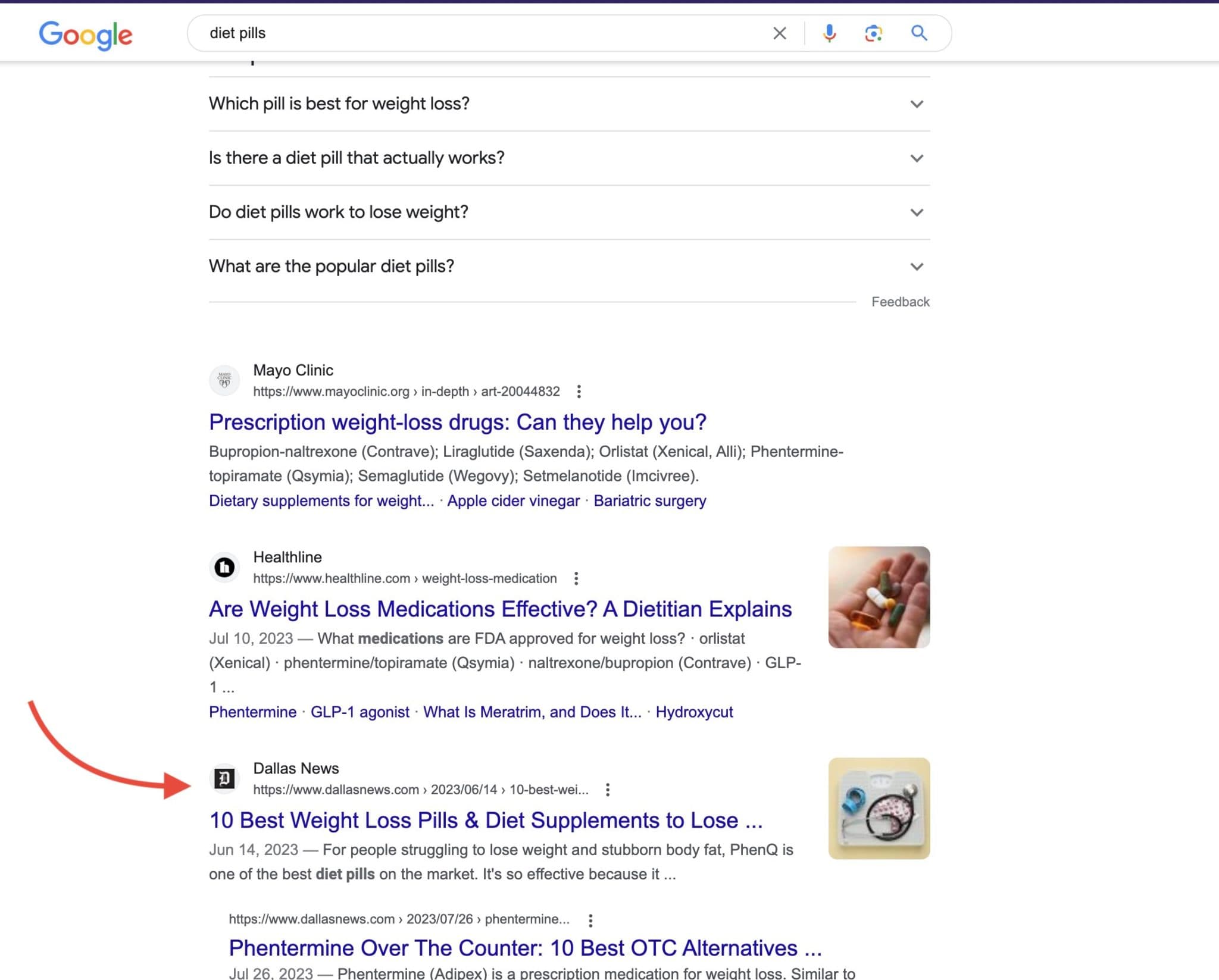
This has been a tactic used by local news sites for example. Here you can see “DallasNews.com” ranking for the competitive term “Diet Pills”. While Dallas News’ original content has nothing to do with health or dieting these articles leech of their domain’s high Domain Rating (DR).
To make the most of this strategy, it’s important to use relevant keywords in your content and pay attention to user intent as well as your niche. By doing so, you can give your content a significant boost in search engine rankings.
Benefits of Parasite SEO
Parasite SEO offers several benefits that can significantly impact your website’s authority, ranking, and overall SEO performance. These benefits include:
- Building Authority and Ranking: By leveraging the authority and ranking of high-authority websites, your own website can gain credibility and visibility in search engine results.
- Avoiding the Sandbox Period: Parasite SEO allows you to bypass the time-consuming sandbox period and immediately benefit from the established authority of the host website.
Safe Link Building: With Parasite SEO, you can build links without the risk of penalties or negative impacts on your website’s SEO performance.Note that Google now recommends against using Parasite SEO tactics.- High Click-Through Rates (CTR): When your content is hosted on a platform with significant traffic and visibility, there is a higher likelihood of attracting clicks from interested users, leading to more organic traffic and improved user engagement.
- Exact Match and LSI Keywords: By strategically targeting exact match keywords and utilizing latent semantic indexing (LSI) keywords on the host website, you can improve the visibility and relevance of your content.
In conclusion, Parasite SEO is a powerful strategy that allows you to tap into the authority and traffic of high-authority external websites. By publishing your content on these platforms, you can increase your visibility in search engine rankings, generate leads, and achieve successful conversions.
Best Practices for Parasite SEO
To maximize the effectiveness of Parasite SEO, consider the following best practices:
- Keyword Optimization: Conduct in-depth keyword research and strategically incorporate relevant keywords into your content without keyword stuffing.
- Utilizing Google Analytics: Use Google Analytics to track the performance of your parasite SEO efforts and make data-driven decisions to optimize your strategy.
- Understanding User Intent: Tailor your content to directly address the needs and questions of your target audience by understanding user intent.
- Video Optimization: Incorporate video optimization techniques to attract and engage your audience, optimizing titles, descriptions, and tags with relevant keywords.
By following these best practices, you can leverage the authority of high-domain websites, improve your search engine rankings, attract organic traffic, and achieve your digital marketing goals.
Considerations for Parasite SEO
When implementing Parasite SEO, consider two important factors:
- Domain Authority: Choose websites with high domain authority to benefit from their credibility and trust with search engines.
- Choosing the Right Websites: Select websites with a strong online presence, relevance to your niche or industry, and a history of ranking well in search engine results.
By carefully considering domain authority and choosing the right websites, you can maximize the effectiveness of your parasite SEO strategy and achieve better rankings in search engine results.
Remember, parasite SEO is a powerful yet nuanced strategy. Conduct thorough research, identify high-authority platforms, and create high-quality content that resonates with your target audience to achieve success.
Conclusion
Parasite SEO lets you boost your content’s rankings by publishing on high-authority websites. By contributing guest blog posts or sponsored articles to these platforms, you gain valuable backlinks and wider audience exposure, helpful for both new and established sites with low domain authority.
Keep in mind, Google’s March 2024 update increases the risks of this approach. Publishing off-topic or thin content can now lead to search penalties if not done carefully. For best results, pick relevant, trusted sites and share well-written content that matches their audience.
Always follow current guidelines and focus on quality to avoid problems.
Need keyword ideas? Use RightBlogger’s keyword research tool to compare search volume and competition for your topics.

Article by
RightBlogger Co-Founder, Andy Feliciotti focuses on website development and shares photography and travel adventures on YouTube and his blog.




Automated SEO Blog Posts That Work
Try RightBlogger for free, we know you'll love it.





Leave a comment
You must be logged in to comment.
Loading comments...