How to Write a Bio About Yourself in 2026 (Examples + Free Templates)
Use the right template, add one proof point and personality detail, then end with a CTA.

Writing a great bio about yourself can feel weird and be surprisingly challenging when you actually sit down to do it, even for experienced writers. Many of us find it difficult to know where to start in the first place. Am I bragging too much? Did I forget something important? Do I really have zero fun facts about myself?
I’ve been doing this (and having fun writing my own bios) for over a decade, so here’s my practical guide on how to write a bio about yourself, quickly.
Key Takeaways
- Personal and professional bios serve different purposes. Choose your format based on your goals and audience.
- A strong bio highlights your background, achievements, and interests in concise language.
- Use bullet points, templates, and regular updates to keep your bio clear and relevant.
- Always include a call-to-action so readers know how to get in touch or learn more.
- Proofread for errors to maintain credibility.
The trick to writing a genuinely interesting bio is simple and twofold:
- Don’t overthink it
- Understand the fundamentals (so you can dance around the rules)
By far the most common struggle I see people wrestle with when writing a bio about yourself, is way overthinking it to the point of seeking perfection. It helps to start by accepting that your bio doesn’t need to be “perfect”(whatever that means, anyway). You can always come back and update it later.
It does help though, to have a solid grasp on the fundamentals of writing a bio that truly captures your personality & doesn’t put the reader to sleep. With a clear framework to follow, you won’t have to stare at a blank screen, unsure about how to begin, or if you’re even on the right path.
In this guide, I’ll walk you through how to write both a personal bio and a professional bio, that effectively represents who you are and what you do (in an interesting way), giving you a process you can follow for any type of bio in the future. Oh, and be sure to try our Social Bio Generator tool for a quick head start.
Complete Blog Automation in Minutes
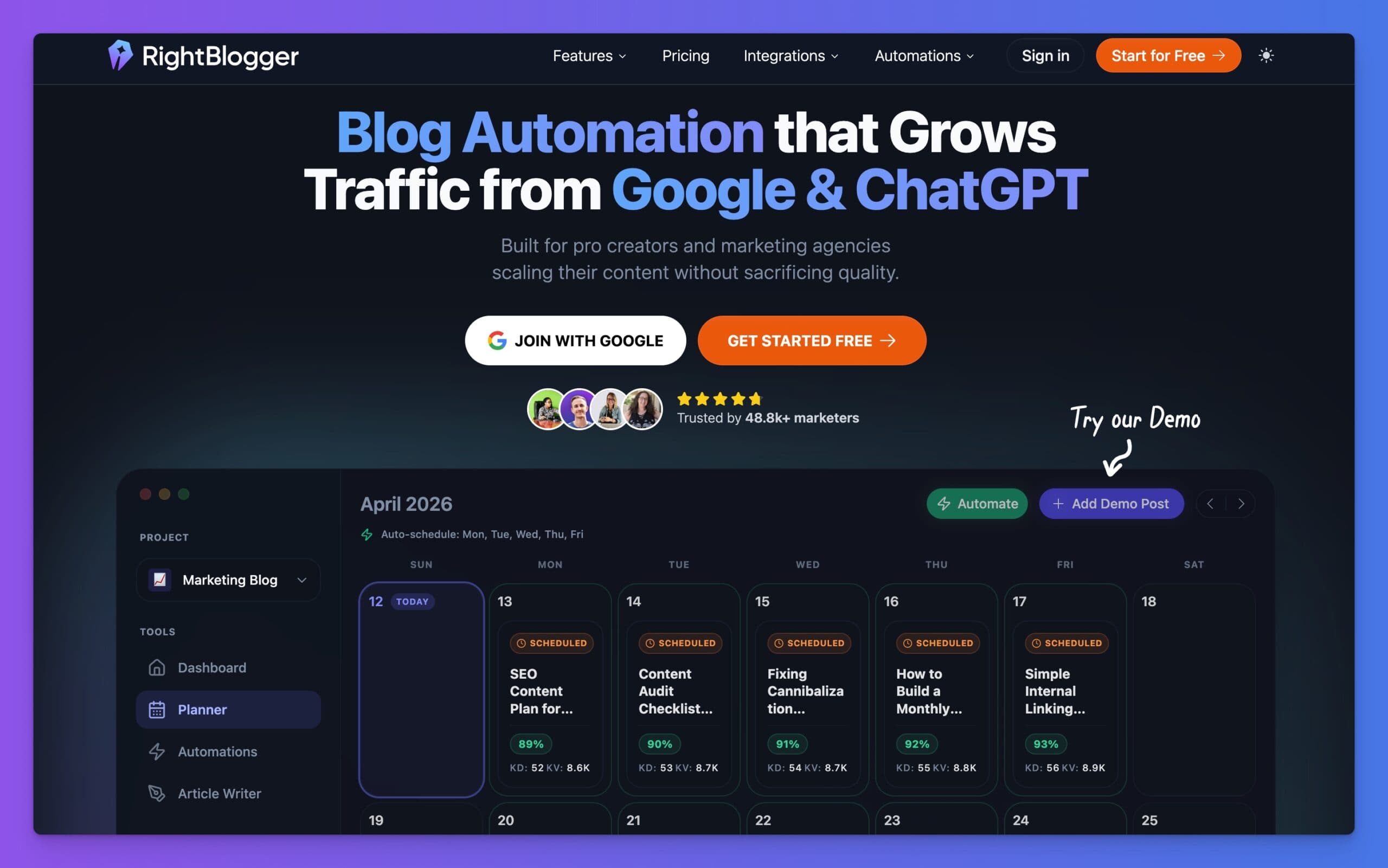
RightBlogger is an AI blog automation tool that helps you research, write, publish, promote, and maintain your blog. Join 50,000+ bloggers, creators, and marketing teams using it to grow traffic from Google and ChatGPT, with 80+ standalone tools, online courses, and a private community included on every plan.
What’s the Best Way to Write a Bio About Yourself?
Start with your audience and your goal in mind, keep it concise (somewhere between 80–250 words depending on the platform), highlight 1–2 achievements you’re genuinely proud of, and end with a call-to-action so readers know how to reach you. The shortcut: be clear about who you are, what you do, and what you want them to do next.
The 2 Types of Bios (Explained with Examples)
Understanding the two main types of bios is a good starting point to writing a bio about yourself, so you can decide which route will effectively represent you in various different contexts.
The two primary types are personal bios and professional bios.
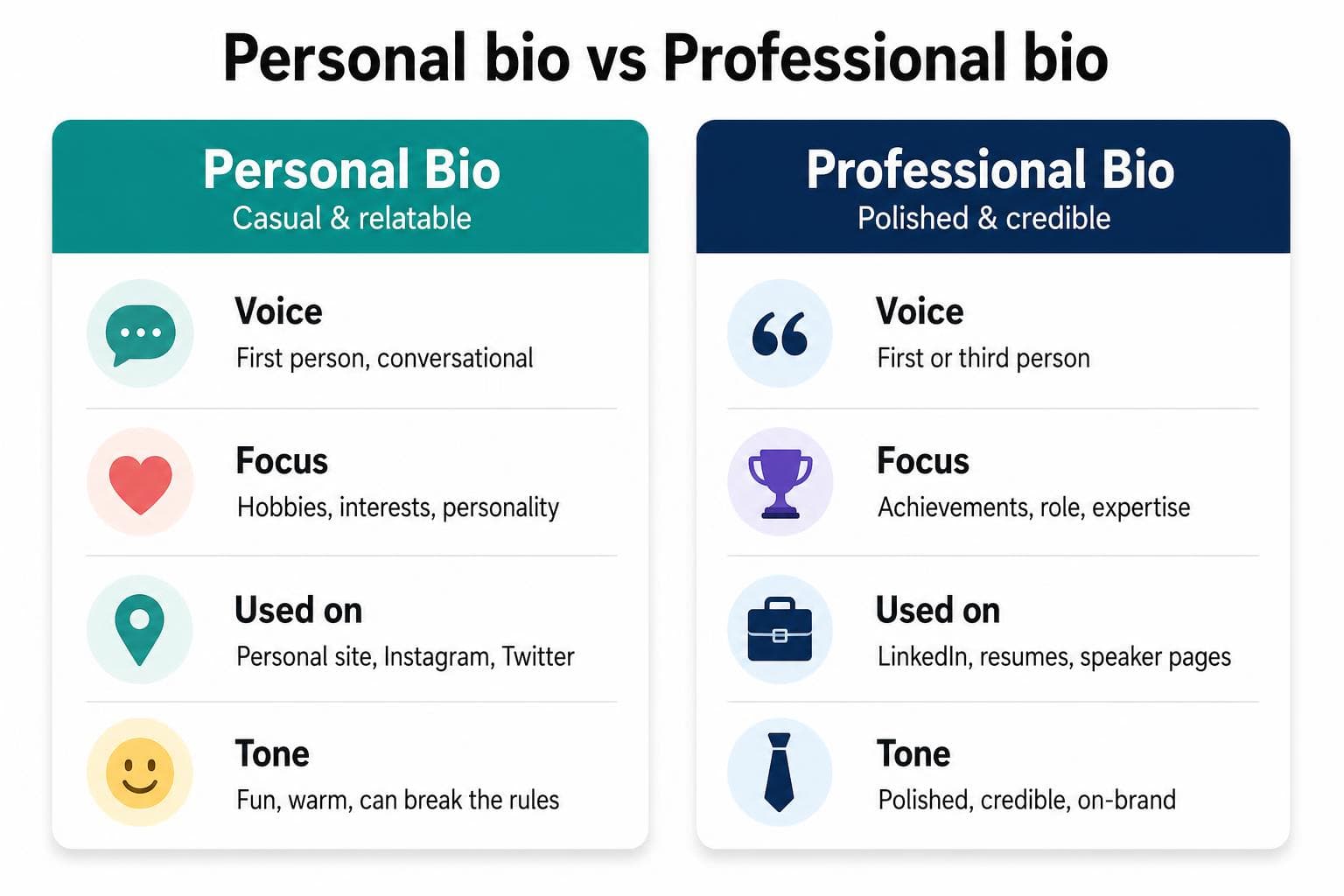
While I often have fun blending these two together and blurring the lines a bit in my own process, that’s not for everyone. Maybe you need a professional bio for LinkedIn that serves a distinct purpose, and you want a personal bio that’s tailored to a totally different audience for your about page. Let’s examine these two types of bios, and I’ll share examples along the way.
The Personal Bio
A personal bio is usually a brief, informal introduction that highlights who you are on a more personal level. This type of bio is almost always written in the first person, and is used on personal websites, social media profiles, and in more casual networking settings. Here’s a personal bio example, from my Instagram:
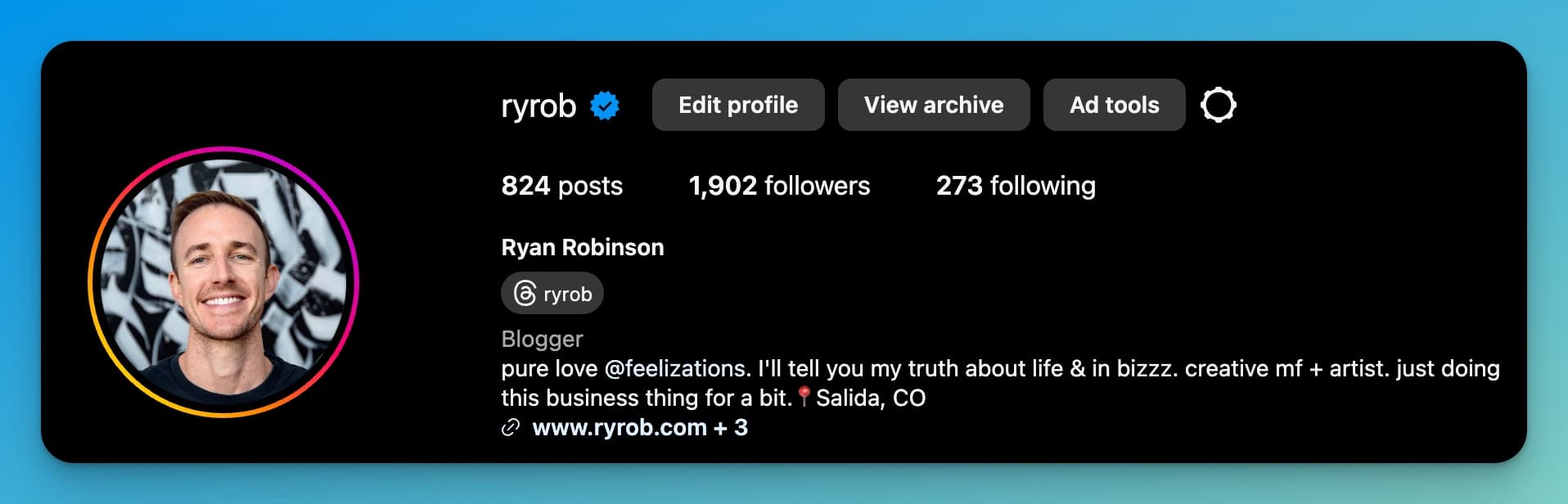
A personal bio doesn’t have to capture everything about you, and it doesn’t need to include your entire highlight reel, this is the one to really have fun with. When writing a personal bio, I like to think about who I am to my closest friends & family.
Here’s what makes a personal bio unique and how to write a bio about yourself for more informal settings:
- Personal Touch: Personal bios are way more relaxed and conversational. They allow you to showcase your personality, hobbies, and interests.
- Background Information: Include relevant background information that gives insight into who you are. This could include things like your line of work, upbringing, education, or significant life experiences.
- Achievements and Interests: While not essential, highlighting key achievements that are meaningful to you personally are always welcome. It’s your interests, hobbies, and who you are outside of the work dimension of yourself that (in my opinion) makes a personal bio relatable & engaging.
- Personal Branding: Use this opportunity to experiment with your personal brand, share what you stand for, your values, what drives you, and why you’re here.
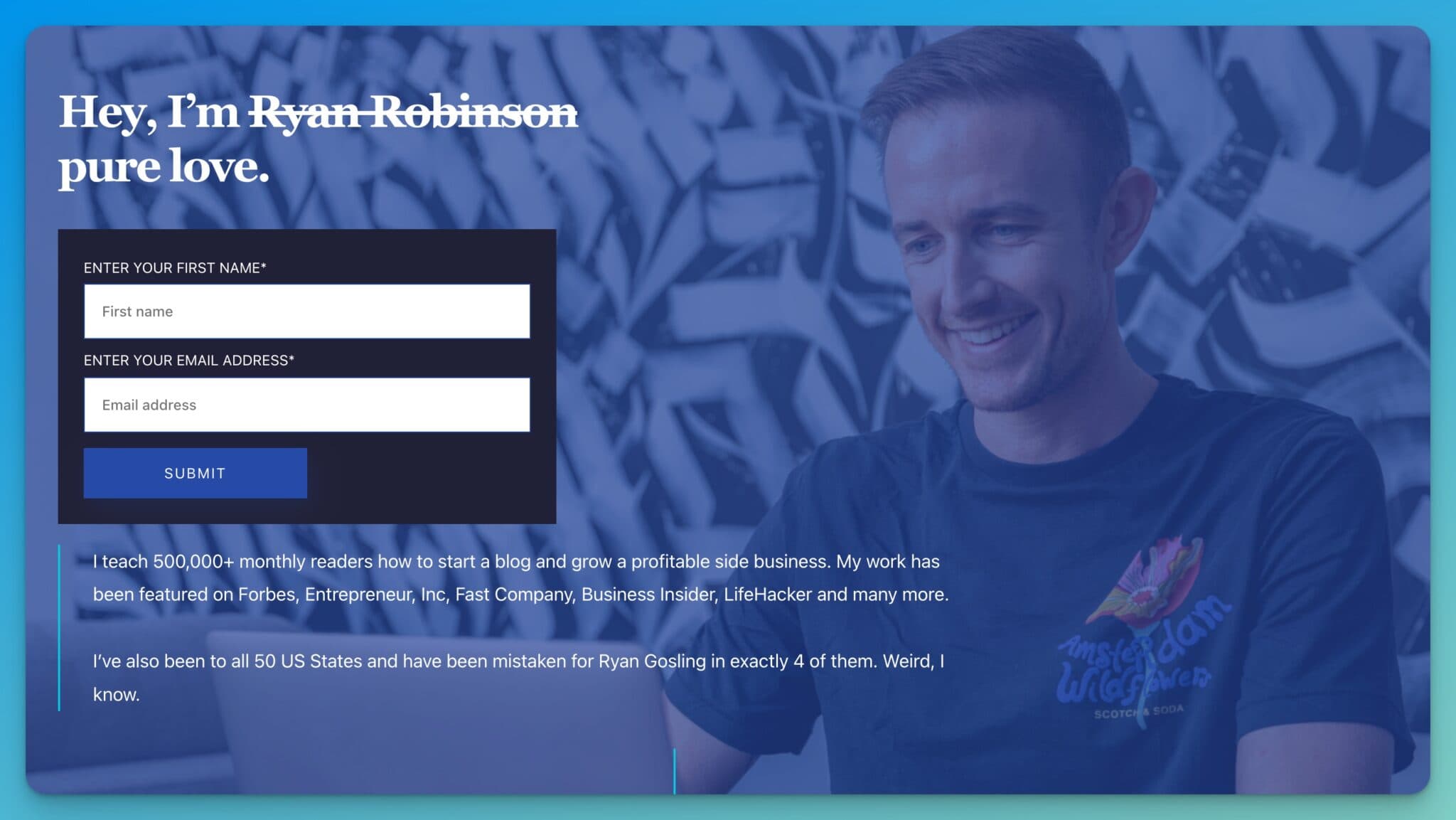
Here’s an example of a personal bio that’s a bit more business-forward & expansive, from my about page:
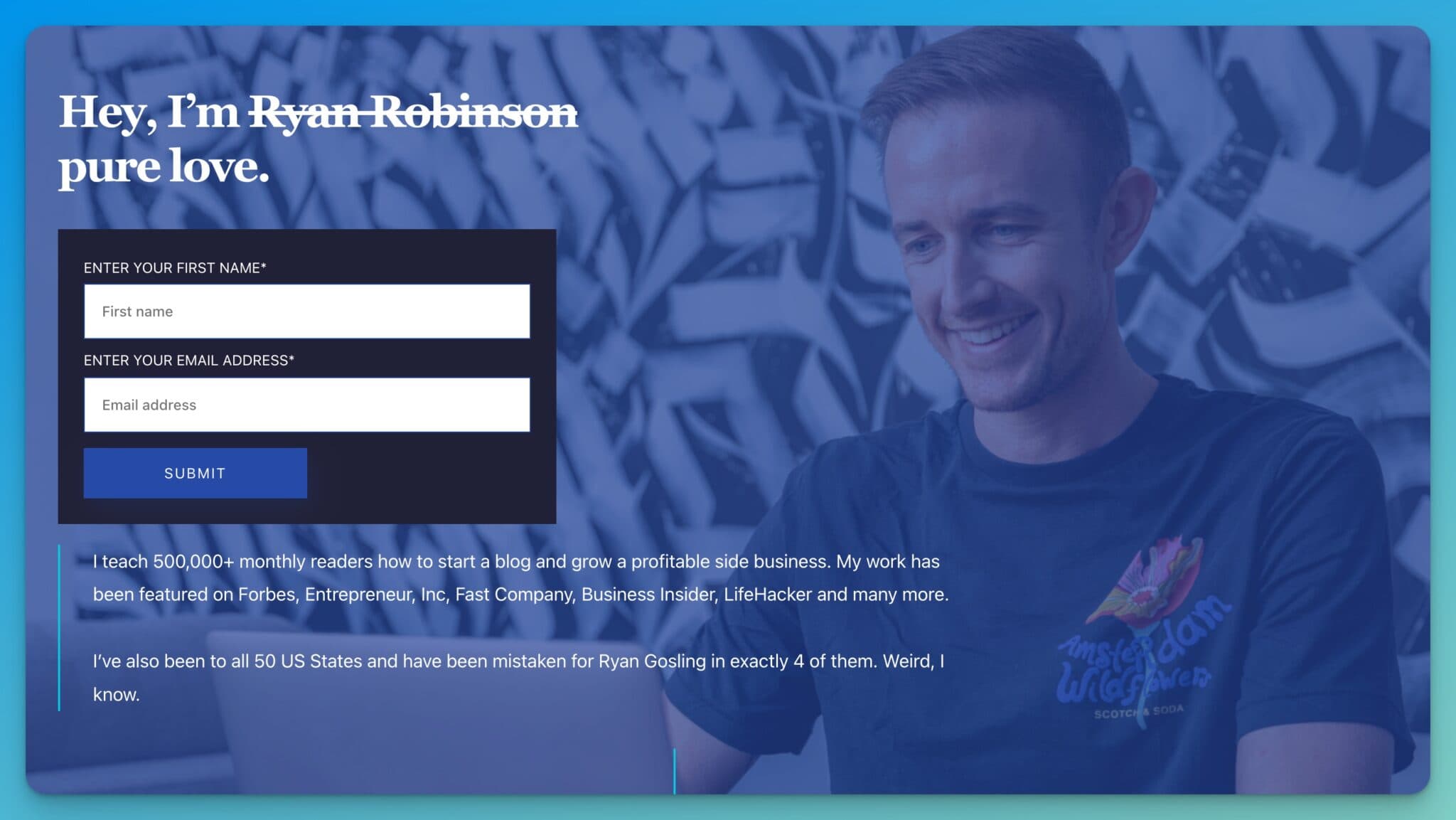
Hey, I’m Ryan Robinson (pure love). I teach 500,000+ monthly readers how to start a blog and grow a profitable side business. My work has been featured on Forbes, Entrepreneur, Inc, Fast Company, Business Insider, LifeHacker and many more. I’ve also been to all 50 US States and have been mistaken for Ryan Gosling in exactly 4 of them. Weird, I know.
If you’re a food blogger, maybe you’d wanna go for something like…
Hey, I’m Chris P. Bacon, a world traveler and food (bacon) enthusiast based in New York City. I have a love for exploring new cultures and cuisines, and I document my favorite eats on my blog, “ChrisPBacon.” When I’m not traveling or snackin hard, you can find me hiking in the Adirondacks or experimenting with new recipes in my kitchen. Connect with me on Instagram: @ChrisPBacon.
My Personal Bio Template (Copy & Paste)
Here’s a personal bio template you can use to write your more casual, informal bio:
Now, let’s take a look at some more clearly professional-style bios.
The Professional Bio
A professional bio, on the other hand, is typically a bit formal and focuses more on your career achievements, skills, and professional background, think of this as putting your best foot forward for a potential job, client, or customer.
👋 Another key difference that distinguishes a professional bio, is that they’re sometimes, but not always, written in the third person voice (i.e. Ryan Robinson is a Blogger instead of I’m a blogger). But in my opinion, if you’re here learning how to write a bio about yourself, just write it in the first person, not many people have someone else actually write their bio for them, so why pretend?
Whether you’re writing a professional bio for your LinkedIn profile, to share on job applications, or for your bio on a corporate website, here are a few ways to make yourself stand out:
- Professional Tone: If it fits your style, you can use more formal language here to uphold a professional vibe throughout your bio. Know that this rule is not cast in stone though, so it really depends on your profession and how you want to present yourself to others in your industry.
- Current Position: Begin with your current job title and the organization you’re affiliated with, or a one-line value proposition that captures your offer to people who come across your profile.
- Career Overview: Provide a brief summary of your career, emphasizing notable roles and achievements.
- Skills and Expertise: Highlight your main skills and areas of expertise to showcase your professional strengths.
- Educational Background: Detail your educational qualifications and any relevant certifications to enhance the credibility of your bio. Highlight degrees, institutions, and any special honors or distinctions received.
- Professional Memberships: List the professional organizations or associations you belong to, if any. This shows your active participation and engagement in your industry, which can add depth to your professional profile.
- Contact Details: Provide clear contact information, like your email address or a link to your LinkedIn profile. This makes it easy for potential professional connections to reach out to you directly.
Here’s an example of a professional bio I really like, because it leans into (Yung Pueblo) the author’s highlights, achievements, and how to work with him, all in a more casual style and tone I resonate with:
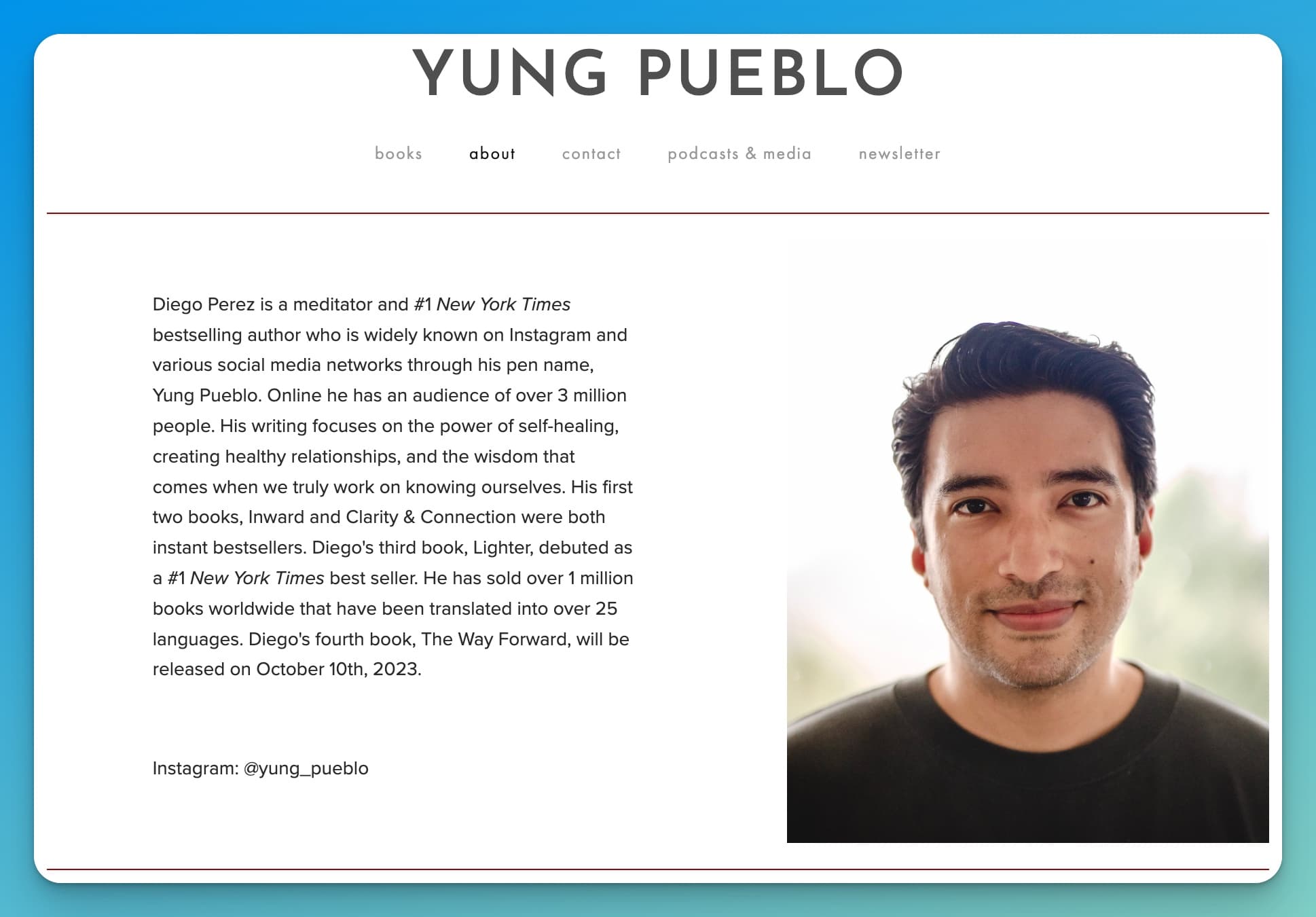
Diego Perez is a meditator and #1 New York Times bestselling author who is widely known on Instagram and various social media networks through his pen name, Yung Pueblo. Online he has an audience of over 3 million people. His writing focuses on the power of self-healing, creating healthy relationships, and the wisdom that comes when we truly work on knowing ourselves. His first two books, Inward and Clarity & Connection were both instant bestsellers. Diego’s third book, Lighter, debuted as a #1 New York Times best seller. He has sold over 1 million books worldwide that have been translated into over 25 languages. Diego’s fourth book, The Way Forward, will be released on October 10th, 2023.
If you’re a marketing manager, maybe you’d wanna go with a professional bio more like…
I’m a Senior Marketing Manager at XYZ Corporation, where I lead a team in developing revenue-impacting marketing strategies. With over ten years of experience in digital marketing, I’ve successfully executed campaigns that have significantly increased brand awareness and sales. I hold an MBA from Harvard Business School and am a certified Digital Marketing Professional. I’m a member of the American Marketing Association and regularly speak at industry conferences. Connect with me on LinkedIn at [URL] or via email at jane.doe@xyzcorp.com.
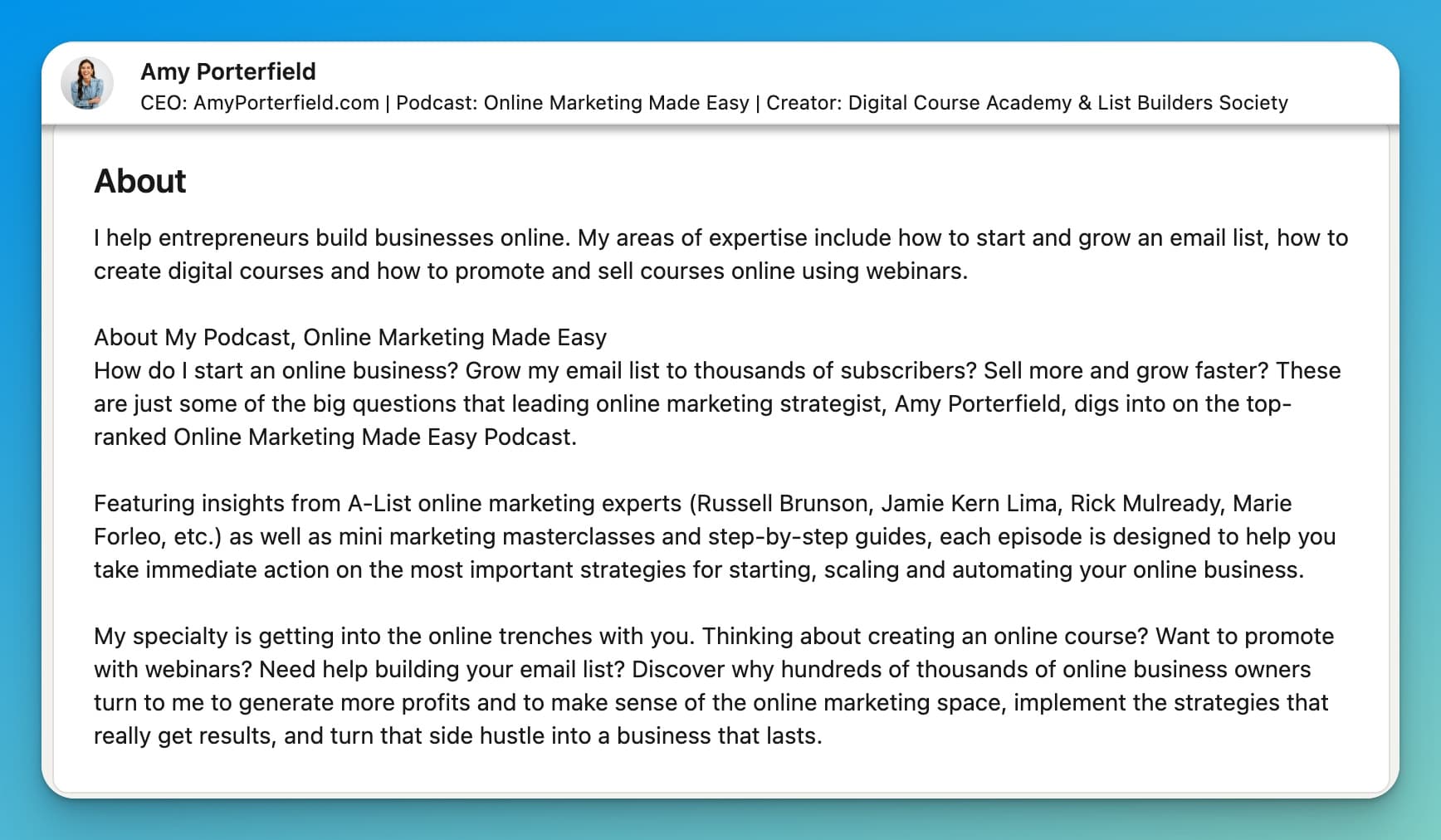
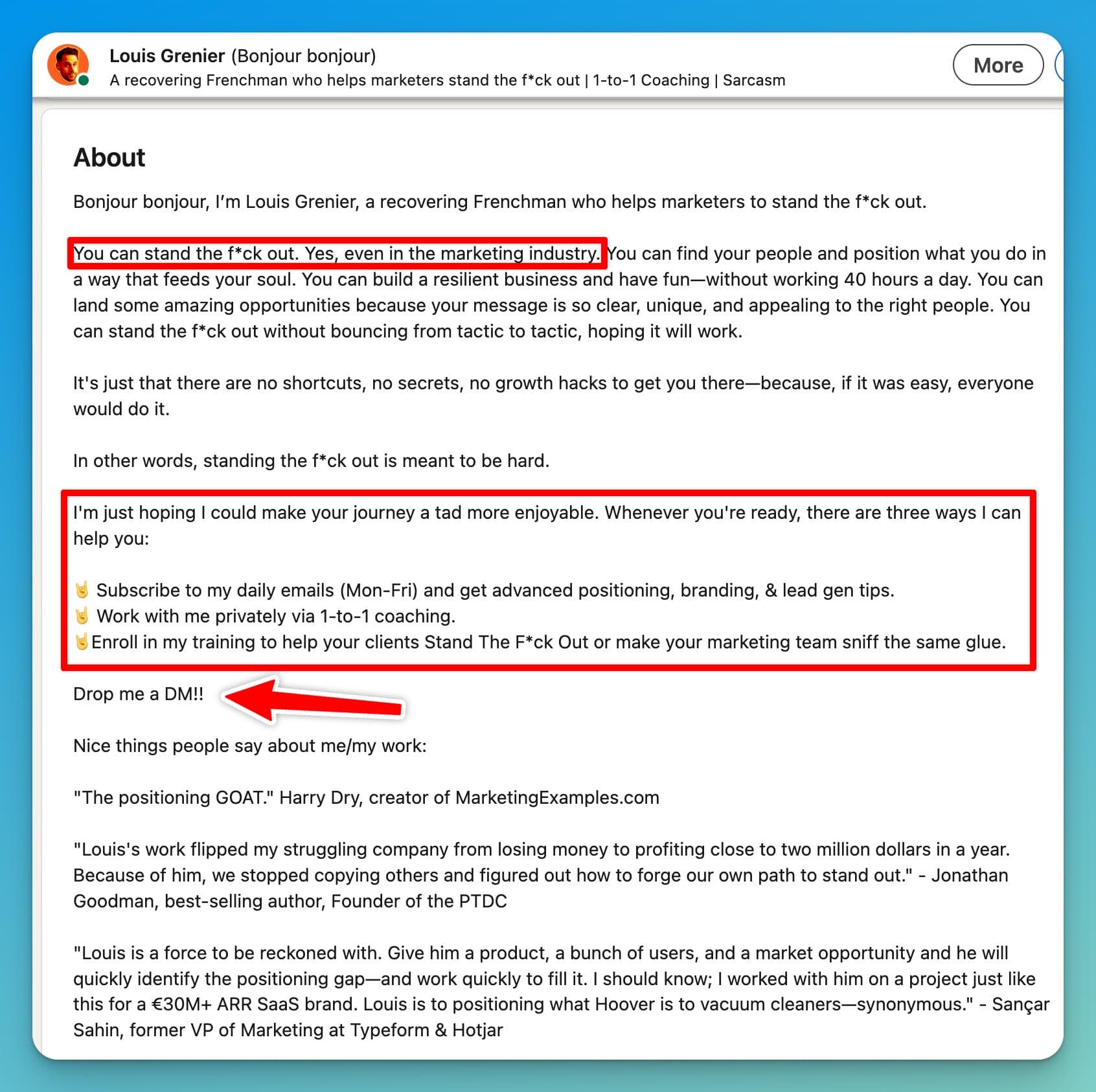
Another example of a fantastic professional bio that blurs the lines of what it means to be “professional” is from my friend and fellow marketer I adore, Louis Grenier, who’s taught no-BS marketing advice for many years.
Take a peek at how well he describes who he is and exactly what he can help you with, from his LinkedIn bio:
To get you started on the right track, here’s how I recommend whipping up your professional bio.
My Professional Bio Template (Copy & Paste)
You can use this professional bio template anytime:
Alright, now we’re ready to get to the main course, how to write a bio about yourself, step-by-step.
6 Steps to Write a Standout Bio About Yourself

In order to learn how to write a bio about yourself that’s genuinely captivating and accomplishes your goals, here’s a simple framework to follow, starting with knowing what your goals are, in the first place.
1. Know Your Audience & Your Goals
What action do you want someone to take after reading your bio?
Take time to really think about how you want someone to interact with you when they come across you online. If you want them to email you, give that a nudge & include your email address to make it easy. Remove friction wherever possible.
Even if you’re repurposing the same bio from platform to platform, I recommend thoughtfully tweaking your bio based on the specific platform & audience it’s intended for.
For example, a LinkedIn bio should probably focus more on your professional achievements, skills, and value propositions to a potential employer, client, or customer, while a personal bio for your blog can be more casual and include way more about your interests & hobbies outside of work.
2. Be Concise(ish)
In most cases, you’ll wanna keep your bio relatively brief and straight to the point on most platforms, especially for online profiles where readers may only spend a few seconds scanning about who you are.
Focus on the most important information that highlights who you are, what you do, and why you do it, with an emphasis on using fun formatting elements like bullet points and emojis 👀 that’ll visually stand out and draw a reader’s eye.
3. Highlight Your Achievements
Don’t be shy about showcasing your accomplishments, this is literally the best place to do it baby! You deserve to shine and feel the pride you have in the things you’ve done in this lifetime (so far)🏆
Highlighting some of your achievements will help you stand out from the crowd and provide proof of your skills and expertise.
🙈 Important: If you’re having a hard time coming up with achievements, accomplishments, or things you’re proud of about yourself, ask a close friend or family member to help you out here. I can promise you, when they’re in the right state of mind, people who care about you will be excited to shower you with this kind of love & remind you of how absolutely awesome you are.
4. Update Your Bio Regularly
I like to revisit & update my bio every 6 months. I’m not a stickler about the timing of it, but about twice a year, I give my bio at least on LinkedIn and on my blog’s about page a quick once over to see if there’s anything I want to add, update, or remove.
Keep your bio updated with your latest achievements, roles, and relevant changes in your professional or personal life. Regular updates here will make sure your bio remains current and accurate.
5. Proofread Your Bio
Nothing is worse than a glaring typo in your bio. Before publishing, carefully review your bio to make sure it is free of typos and grammatical mistakes. A polished bio reflects your attention to detail and high degree of ownership in your work.
It’s often very helpful to have a trusted friend or colleague look it over to scan for any errors you might’ve missed, too. You can also use RightBlogger’s Grammar Fixer to proofread your bio copy and clean up any mistakes.
6. Include a Call-to-Action
Let’s bring it back home to your original goal. What action do you want people to take after learning more about you?
When your ideal customer, client, reader, viewer, or listener is reaching the end of your bio, meaning they read all the way to the end, they’re extremely engaged. You’ve captivated them. You’re holding their attention. So, what do you want to do next with them?
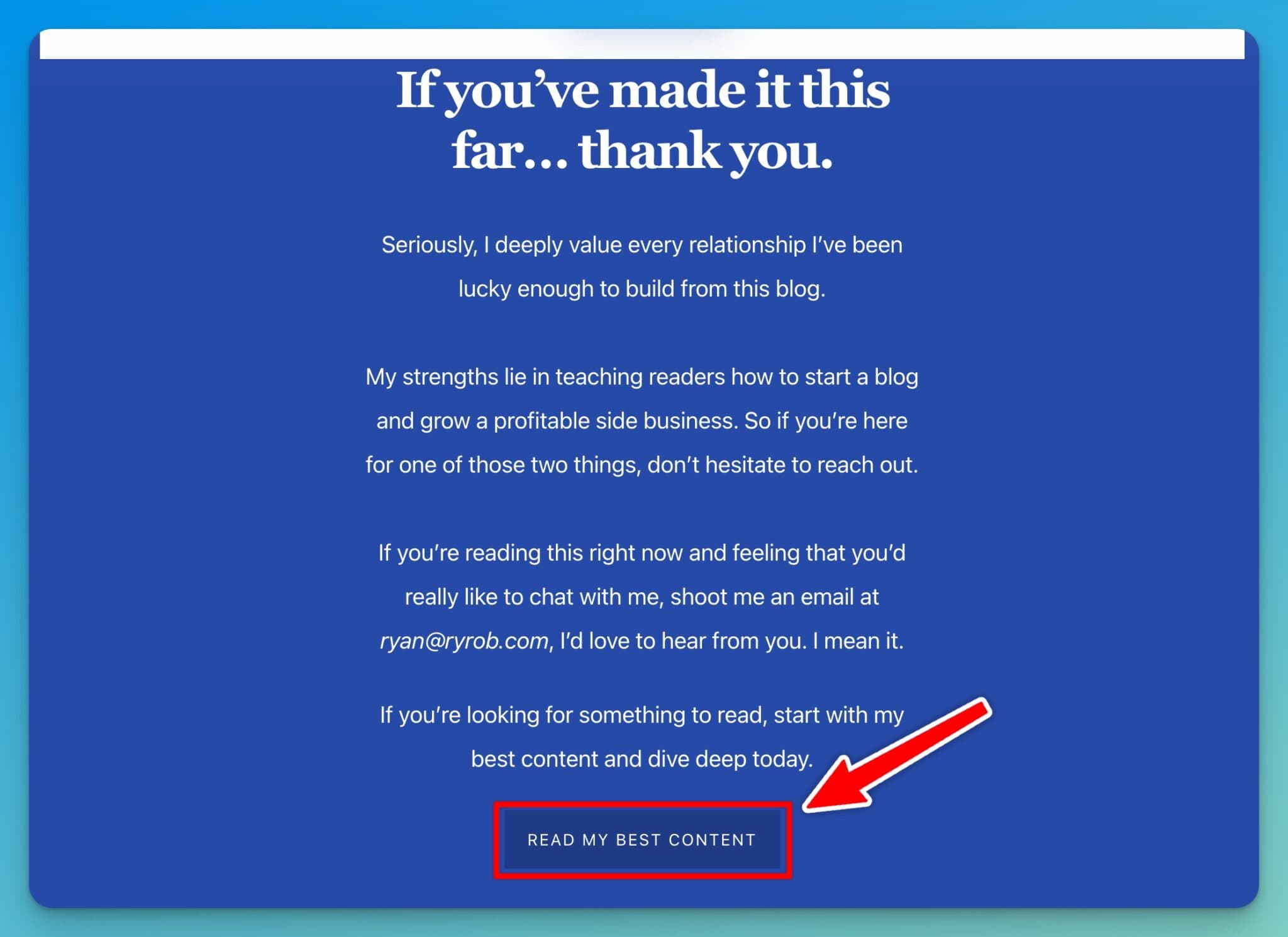
Over on my blog’s about page, I wrap up my bio with a heartfelt thanks to the people who’ve taken the time to read about me. That’s truly special, so I share that, before pointing readers to all my best content where they can read more.
Here are a few examples of strong calls-to-action to use from your bio:
- Fill out a contact or lead qualification form for people to start working with you
- Give clear instructions for how to reach out to you or learn more about you (provide your email address, a link to your website, and social handles)
- Sign up for a free course, eBook, or downloadable resource you’ve made
Including a direct call-to-action at the end of your bio makes it easy for people to understand how to interact with you, and quickly get connected.
Frequently Asked Questions
How do I write a short bio about myself? Stick to 50–100 words and lead with the punchiest version of who you are. Open with your name + what you do (in plain English), add one specific proof point, mix in one personality detail, and close with how to reach you. Don’t overthink it.
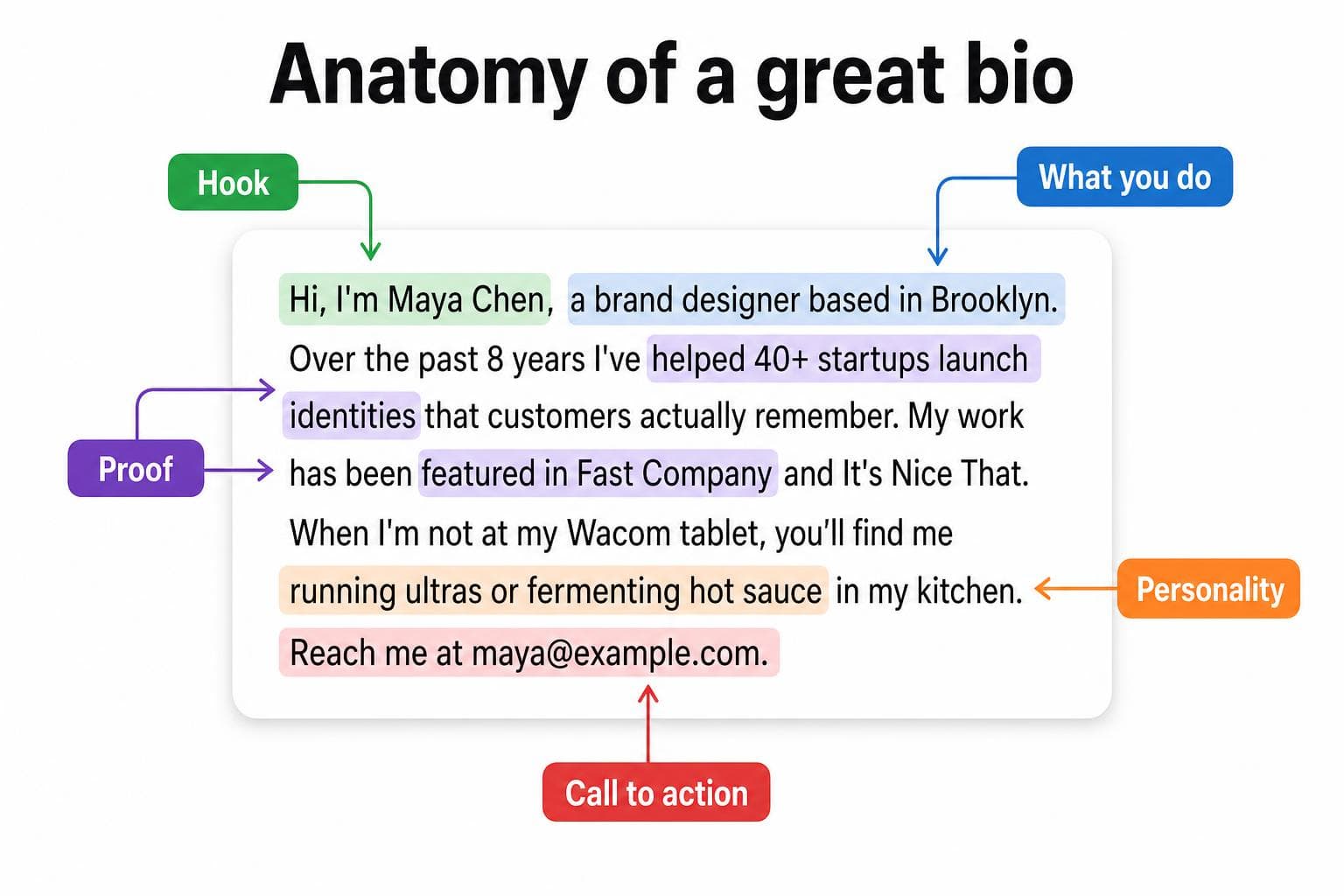
What is a good bio example? Here’s a tight one: “Hi, I’m Maya Chen, a brand designer based in Brooklyn. Over the past 8 years I’ve helped 40+ startups launch identities customers actually remember. When I’m not at my Wacom tablet, you’ll find me running ultras or fermenting hot sauce. Reach me at maya@example.com.” Five sentences, hook, what you do, proof, personality, CTA.
What should I avoid in a bio? Buzzwords like “passionate ninja rockstar” (just say what you do), vague claims with no proof (“I help people grow”, grow how?), your entire highlight reel from third grade onward, third-person voice when you’re literally the one writing it, and finishing without a CTA. Also: typos. Always proofread.
What is a good opening line for a bio? A few that work: “Hi, I’m [name], a [role] who helps [audience] [outcome].” Or “I’m a [role] based in [city] who’s spent the last [X] years [doing thing].” Or simply: “[Name] is a [role] who [one specific thing they do].” Skip “Welcome to my page!” or anything that sounds like an autoresponder.
How long should my bio be? For most online profiles, keep your bio between 80 and 250 words. Edit for the platform. Shorter is best for social media, while a website bio or LinkedIn summary can be a bit longer.
Should I use first or third person? First person feels more personal and is fine for most uses. Third person suits formal contexts or when someone else writes about you.
How often should I update my bio? Update at least every six months, or when your role, achievements, or focus changes.
What should I do if I have few achievements? Focus on your interests, unique background, or skills you want to develop. You can also ask others for feedback to spot strengths you might overlook.
Is it ok to include a bit of humor or personality? Yes, when it fits the platform and audience. Even professional bios can benefit from a human touch if appropriate.
Final Words on How to Write a Bio About Yourself
Writing a bio about yourself (whether personal or professional) doesn’t have to be painful or overwhelming. But I get it, I’ve been there.
Once you have a handle on the different types of bios (and platforms where they can be deployed), use my free bio templates and you’ll be on the right track. Incorporate my pointers, soak up lessons from examples of bios you admire, and you’ll nail that online representation of yourself.
To recap, here are my quick steps for how to write a bio about yourself:
- Keep your audience and goals in mind
- Be concise(ish) and in expected word count range for each platform
- Highlight your achievements (you deserve to shine, baby!)
- Update your bio often (I recommend twice a year)
- Proofread carefully before you publish or update
- Include a clear call-to-action & make it easy for readers to connect with you
With this game plan, you’ll be well on your way to writing an engaging bio that makes your readers smile. And if you want a little help jumpstarting your writing process, try our Social Media Bio Generator today.
Complete Blog Automation in Minutes
RightBlogger is an AI blog automation tool that helps you research, write, publish, promote, and maintain your blog. Join 50,000+ bloggers, creators, and marketing teams using it to grow traffic from Google and ChatGPT, with 80+ standalone tools, online courses, and a private community included on every plan.

Article by
RightBlogger Co-Founder, Ryan Robinson teaches 500,000 monthly readers how to grow an online business. He is a recovering side project addict.

Automated SEO Blog Posts That Work
Try RightBlogger for free, we know you'll love it.




Leave a comment
You must be logged in to comment.
Loading comments...